Microservices Architecture vs Monolithic Architecture: Key Differences and Benefits
In the fast-paced world of software development, choosing the right architecture can make or break your application's success. As businesses scale and user demands grow more complex, two dominant approaches stand out: monolithic architecture and microservices architecture.
Whether you're a startup founder in Karachi building your first MVP or an enterprise team modernizing legacy systems, understanding these models is crucial in 2026. Monoliths offer simplicity for small teams, while microservices deliver unmatched scalability and agility for large-scale applications.
This comprehensive guide explores the key differences, benefits, challenges, and real-world applications of both architectures. By the end, you'll have clear insights to decide which path suits your next project. (Word count: ~1520)
What is Monolithic Architecture?
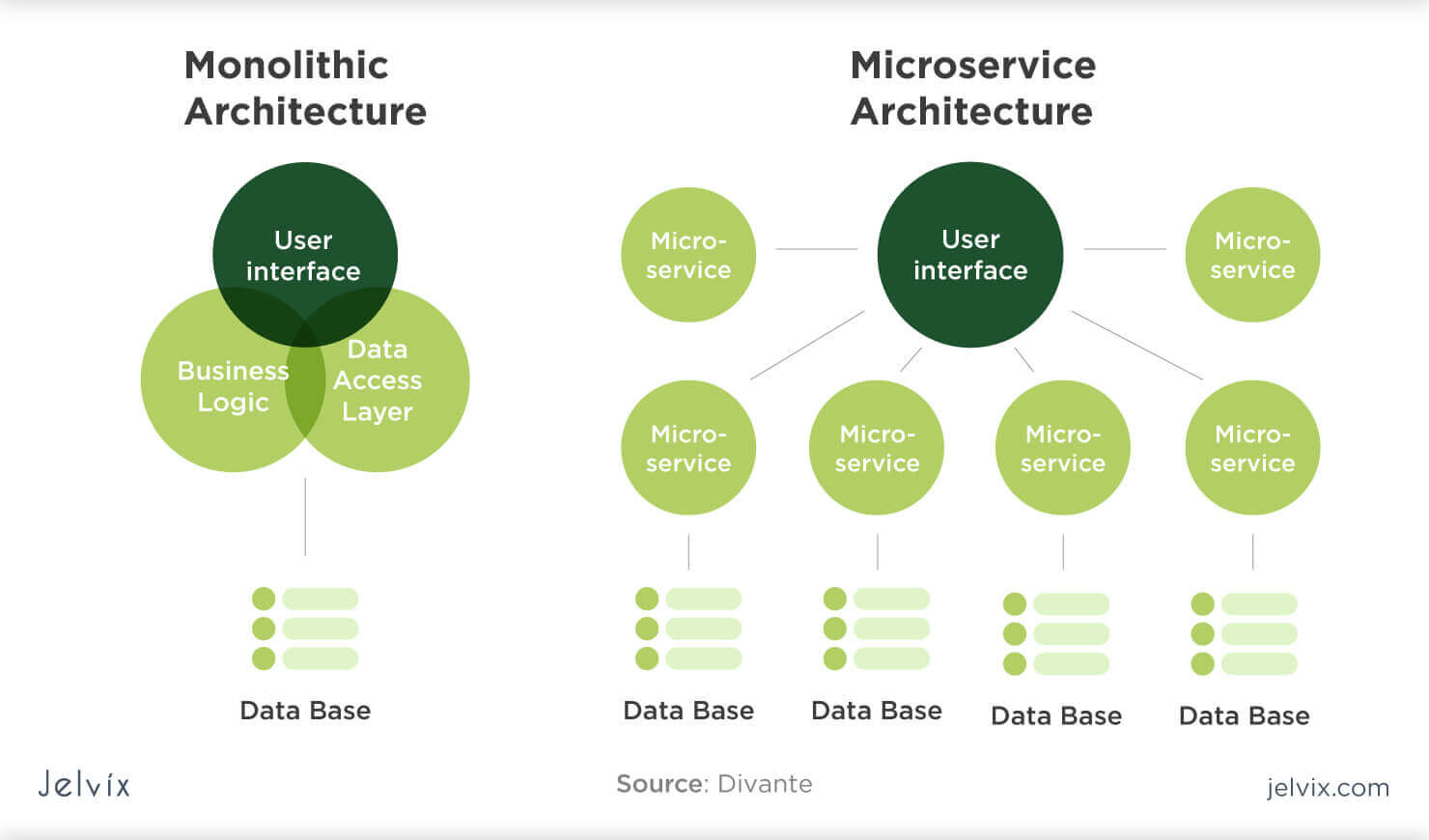
Monolithic architecture is the traditional way of building applications. In a monolith, all components—user interface (UI), business logic, data access layer, and database interactions—are tightly coupled and packaged into a single, unified codebase and deployment unit.
Imagine an e-commerce app where the product catalog, shopping cart, payment processing, and user authentication all live in one big executable file. Everything runs as a single process on one server (or a cluster of servers scaled vertically).

How it works: Developers write the entire application in one technology stack (e.g., Java Spring Boot or .NET). Changes to any module require rebuilding and redeploying the whole application. Communication between components happens via in-process method calls, which makes it fast but inflexible.
Advantages of Monolithic Architecture:
- Simpler development and deployment: One codebase means faster initial setup, easier debugging with a single stack trace, and straightforward CI/CD pipelines.
- Better performance: No network latency between services—everything runs in memory.
- Lower operational overhead: Easier monitoring, logging, and testing since there's only one application to manage.
- Ideal for small teams and MVPs: Startups or small projects can move quickly without the complexity of distributed systems.
Disadvantages:
- Scalability issues: You scale the entire app even if only one feature (like payments) needs more resources.
- Single point of failure: A bug in one module can crash the whole system.
- Technology lock-in: Hard to introduce new languages or frameworks as the app grows.
- Maintenance nightmare as it scales: Codebases become massive (millions of lines), slowing down development and increasing bugs.
Many early versions of popular apps started as monoliths for speed-to-market. However, as user bases explode, monoliths often hit a wall.
What is Microservices Architecture?
Microservices architecture breaks a large application into a collection of small, independent services. Each service focuses on a single business capability (e.g., user service, order service, payment service) and runs as its own process. Services communicate via lightweight protocols like HTTP/REST, gRPC, or message queues (Kafka, RabbitMQ).
This approach was popularized by Martin Fowler in his 2014 article, where he described it as “an approach to developing a single application as a suite of small services, each running in its own process.”
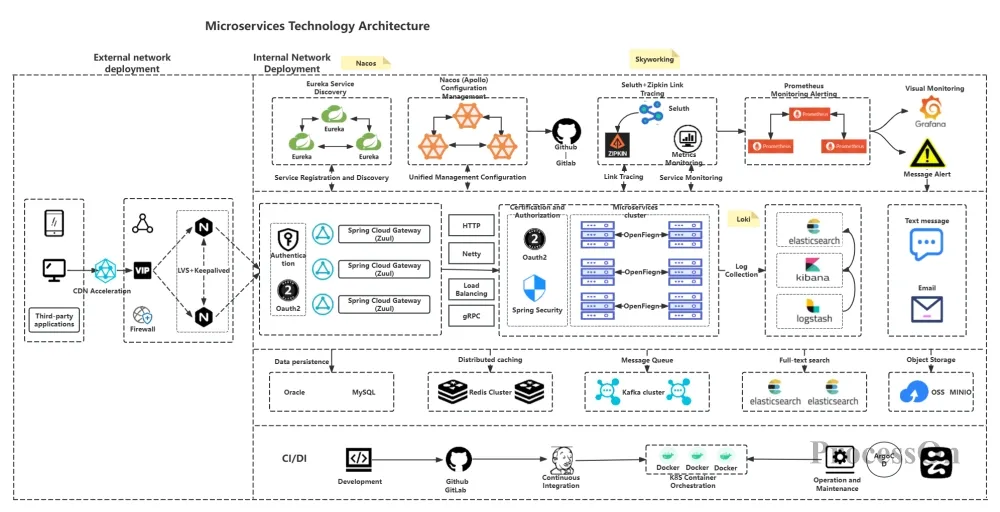
How it works: Each microservice has its own database (database-per-service pattern), codebase, and deployment pipeline. They are loosely coupled and can be developed, deployed, and scaled independently. An API gateway often routes requests to the appropriate services.
Advantages of Microservices Architecture:
- Independent scalability: Scale only the services under heavy load (e.g., scale payment service during Black Friday).
- Faster innovation and deployment: Teams can release updates to one service without affecting others—multiple deployments per day become possible.
- Technology diversity (polyglot): Use the best tool for each job—Node.js for real-time features, Python for AI services.
- Fault isolation: One service failing doesn’t bring down the entire system.
- Better team autonomy: Aligns with Conway’s Law—small, cross-functional teams own end-to-end responsibility for a service.
Disadvantages:
- Increased complexity: Distributed systems introduce challenges like network latency, eventual consistency, and debugging across services.
- Higher operational overhead: Requires robust DevOps practices, service discovery (Eureka, Consul), orchestration (Kubernetes), and observability tools (Prometheus, Jaeger).
- Initial setup cost: More infrastructure and planning upfront.
In 2026, microservices power most cloud-native applications, especially those handling massive traffic.
Key Differences: Monolithic vs Microservices
Here’s a side-by-side comparison based on real-world factors in 2026:
| Aspect | Monolithic Architecture | Microservices Architecture |
|---|---|---|
| Structure | Single unified codebase and deployment unit | Multiple independent, loosely coupled services |
| Deployment | Entire app deployed at once | Each service deployed independently |
| Scalability | Vertical (bigger servers) or full horizontal | Horizontal—scale individual services |
| Technology Stack | Uniform (one language/framework) | Polyglot—different per service |
| Fault Tolerance | Single point of failure | Isolated failures—high resilience |
| Development Speed | Fast initially, slows as codebase grows | Slower start, faster long-term with parallel work |
| Data Management | Shared single database | Database-per-service pattern |
| Team Organization | Large teams on shared code | Small, autonomous teams per service |
| Communication | In-process calls (fast) | Network calls via APIs (adds latency) |
| Operational Complexity | Low | High (requires advanced DevOps) |
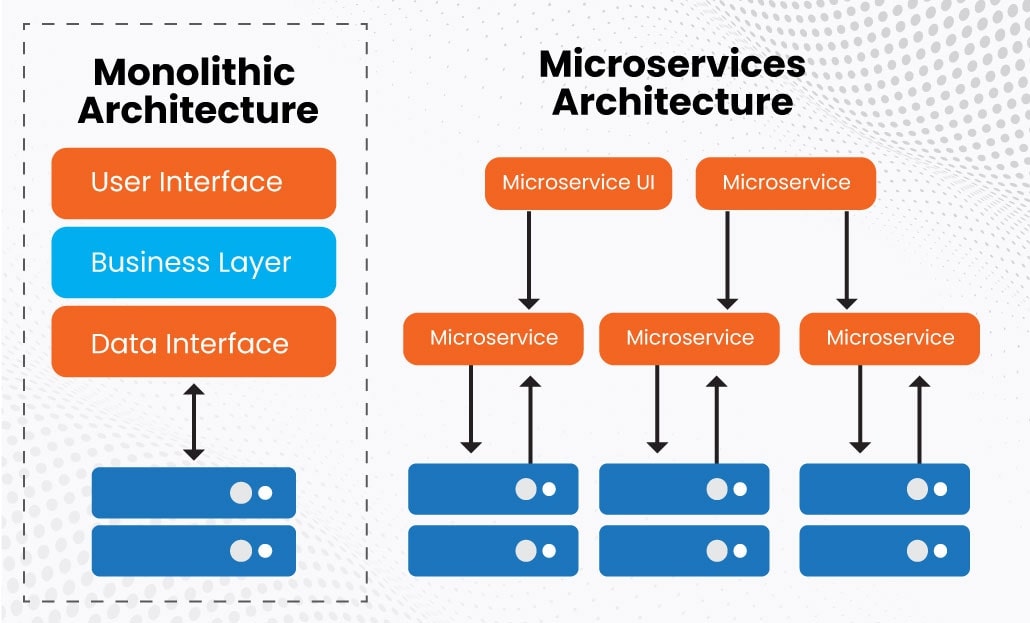
These differences highlight why many organizations start with a monolith and gradually migrate to microservices when complexity increases.
Benefits of Each Approach and When to Choose
Benefits of sticking with (or starting as) a Monolith:
- Rapid prototyping for startups or internal tools.
- Lower costs for small-to-medium applications.
- Easier onboarding for new developers.
As one 2026 analysis notes, monoliths remain viable for teams under 10-15 developers or apps with predictable loads.
Benefits of Microservices (the big wins):
- Scalability and cost efficiency: Pay only for what you use in cloud environments like AWS or Google Cloud.
- Faster time-to-market: Parallel development across teams.
- Resilience and innovation: Experiment with new tech without risking the whole system.
- Alignment with modern DevOps: Enables continuous delivery and zero-downtime deployments.
Real-world example: Netflix famously migrated from a monolithic DVD-rental app to over 1,000 microservices. This allowed them to handle millions of concurrent streams with independent scaling and frequent updates— a key factor in their global dominance.
Hybrid approaches are increasingly popular in 2026: Start monolithic, then extract high-traffic modules into microservices (the “strangler fig” pattern).
Internal link suggestion for your Blogger site: Read our detailed guide on migrating from monolith to microservices for step-by-step strategies.
Challenges and Best Practices
Microservices aren’t a silver bullet. Common pitfalls include:
- Distributed data management and consistency issues (use sagas or event sourcing).
- Observability—implement distributed tracing and centralized logging.
- Security—API gateways and service meshes (Istio) become essential.
For monoliths, the main challenge is technical debt as the app grows. Regular refactoring is key.
External resources:
Internal link for your site: Explore our earlier post on DevOps and CI/CD pipelines to prepare for either architecture.
Future Trends in 2026
With serverless computing, edge computing, and AI-driven orchestration rising, microservices continue to evolve. Many teams now combine them with event-driven architectures or shift toward modular monoliths (a balanced middle ground). The choice ultimately depends on your team size, traffic patterns, and growth ambitions—not hype.
Conclusion
Monolithic and microservices architectures each have their place. Monoliths excel in simplicity and speed for smaller or early-stage projects. Microservices shine when scalability, resilience, and rapid iteration are critical.
Start simple: Build a well-structured monolith first, then decompose into microservices only when pain points emerge. This pragmatic approach has helped countless companies—including Netflix—scale successfully.
For developers and architects in Pakistan or globally, the key is aligning architecture with business goals. Evaluate your current needs, team expertise, and long-term vision before deciding.
Ready to modernize your application? Drop a comment below or check our related posts on cloud-native development. What architecture are you using right now—monolith or microservices? Let’s discuss!
Keywords: microservices vs monolithic, architecture comparison, software design 2026, benefits of microservices, monolithic architecture explained.
Microservices Architecture vs Monolithic Architecture: Key Differences and Benefits
In the fast-paced world of software development, choosing the right architecture can make or break your application's success. As businesses scale and user demands grow more complex, two dominant approaches stand out: monolithic architecture and microservices architecture.
Whether you're a startup founder in Karachi building your first MVP or an enterprise team modernizing legacy systems, understanding these models is crucial in 2026. Monoliths offer simplicity for small teams, while microservices deliver unmatched scalability and agility for large-scale applications.
This comprehensive guide explores the key differences, benefits, challenges, real-world applications, FAQs, and top tools/products of both architectures. By the end, you'll have clear insights to decide which path suits your next project.
What is Monolithic Architecture?
Monolithic architecture is the traditional way of building applications. In a monolith, all components—user interface (UI), business logic, data access layer, and database interactions—are tightly coupled and packaged into a single, unified codebase and deployment unit.
Imagine an e-commerce app where the product catalog, shopping cart, payment processing, and user authentication all live in one big executable file. Everything runs as a single process on one server (or a cluster of servers scaled vertically).
How it works: Developers write the entire application in one technology stack (e.g., Java Spring Boot or .NET). Changes to any module require rebuilding and redeploying the whole application. Communication between components happens via in-process method calls, which makes it fast but inflexible.
Advantages of Monolithic Architecture:
- Simpler development and deployment
- Better performance (no network latency)
- Lower operational overhead
- Ideal for small teams and MVPs
Disadvantages:
- Scalability issues (scale everything or nothing)
- Single point of failure
- Technology lock-in
- Maintenance nightmare as the codebase grows
Many early versions of popular apps started as monoliths for speed-to-market. However, as user bases explode, monoliths often hit a wall.
What is Microservices Architecture?
Microservices architecture breaks a large application into a collection of small, independent services. Each service focuses on a single business capability (e.g., user service, order service, payment service) and runs as its own process. Services communicate via lightweight protocols like HTTP/REST, gRPC, or message queues (Kafka, RabbitMQ).
This approach was popularized by Martin Fowler. Each microservice has its own database, codebase, and deployment pipeline. An API gateway often routes requests.
Advantages of Microservices Architecture:
- Independent scalability
- Faster innovation and deployment (multiple releases per day)
- Technology diversity (polyglot)
- Fault isolation
- Better team autonomy
Disadvantages:
- Increased complexity (network latency, eventual consistency)
- Higher operational overhead (requires strong DevOps)
- Initial setup cost
In 2026, microservices power most cloud-native applications, especially those handling massive traffic.
Key Differences: Monolithic vs Microservices
Here’s a side-by-side comparison:
| Aspect | Monolithic Architecture | Microservices Architecture |
|---|---|---|
| Structure | Single unified codebase | Multiple independent services |
| Deployment | Entire app at once | Independent per service |
| Scalability | Vertical or full horizontal | Horizontal—scale individual services |
| Technology Stack | Uniform | Polyglot |
| Fault Tolerance | Single point of failure | Isolated failures |
| Development Speed | Fast initially, slows later | Slower start, faster long-term |
| Data Management | Shared single database | Database-per-service |
| Team Organization | Large teams on shared code | Small autonomous teams |
These differences explain why many organizations start with a monolith and gradually migrate to microservices when complexity increases.
Benefits of Each Approach and When to Choose
Monolith benefits: Rapid prototyping, lower costs for small-to-medium apps, easier onboarding. Monoliths remain viable for teams under 10-15 developers or predictable loads.
Microservices benefits: Scalability and cost efficiency in cloud environments, faster time-to-market, resilience, and innovation. Netflix's migration to over 1,000 microservices enabled handling millions of streams with independent scaling.
Hybrid approaches (modular monoliths or "strangler fig" pattern) are popular in 2026—start monolithic, then extract high-traffic modules.
Internal link: Read our detailed guide on migrating from monolith to microservices.
Challenges and Best Practices
Microservices introduce distributed data challenges, observability needs, and security requirements (use service meshes like Istio). For monoliths, focus on regular refactoring to manage technical debt.
External resources:
Internal link: Explore our earlier post on DevOps and CI/CD pipelines.
Frequently Asked Questions (FAQs)
1. What is the main difference between monolithic and microservices architecture? Monolithic architecture uses a single unified codebase and deployment unit where all components are tightly coupled. Microservices break the application into small, independent services that communicate over APIs and can be developed, deployed, and scaled separately.
2. Is monolithic architecture faster to develop than microservices? Yes, initially. Monoliths allow faster prototyping and simpler debugging with one codebase. Microservices require more upfront planning for service boundaries, communication, and infrastructure, but enable faster parallel development and releases long-term.
3. When should I choose monolithic architecture over microservices? Choose a monolith for startups, MVPs, small teams (under 10-15 developers), simple applications with predictable loads, or when you want lower operational complexity and faster time-to-market. Many successful apps (like early Shopify) scaled well as well-structured monoliths.
4. When are microservices the better choice? Microservices shine for large-scale, high-traffic applications needing independent scaling (e.g., e-commerce during sales peaks), multiple development teams, frequent updates, or technology diversity. They're ideal for cloud-native apps at companies like Netflix, Amazon, and Uber.
5. Can I migrate from monolithic to microservices later? Yes—this is a common "strangler fig" pattern. Start with a monolith, then gradually extract specific functionalities into separate services. Proper domain-driven design and API boundaries make migration smoother.
6. Do microservices always mean better performance and scalability? Not always. While they offer better horizontal scaling and fault isolation, network latency between services can add overhead. Poorly designed microservices can introduce more complexity and even reduce performance compared to a well-optimized monolith.
7. What are the biggest challenges with microservices? Distributed tracing, data consistency (eventual consistency vs. ACID), increased operational overhead (Kubernetes, monitoring), debugging across services, and higher infrastructure costs. Strong DevOps practices and observability tools are essential.
8. Are there hybrid or alternative approaches in 2026? Yes—modular monoliths (breaking a monolith into well-defined modules without full distribution) are gaining popularity. Many teams combine both: a core modular monolith with selected high-scale features as microservices. This balances simplicity and flexibility.
Top Tools and Products for Microservices Architecture in 2026
Building and managing microservices requires a robust toolchain. Here are the most widely adopted tools and frameworks in 2026:
1. Frameworks for Building Microservices:
- Spring Boot (Java) — Still the leader for enterprise microservices. Offers excellent integration with Spring Cloud for configuration, discovery, and gateways.
- Quarkus & Micronaut (Java) — Optimized for Kubernetes and serverless with ultra-fast startup times and low memory usage—perfect for cloud-native deployments.
- NestJS (Node.js/TypeScript) — Popular for JavaScript/TypeScript teams, with built-in support for modular architecture and real-time features.
2. Containerization and Orchestration:
- Docker — The standard for packaging each microservice into lightweight, portable containers.
- Kubernetes (K8s) — The de-facto orchestrator for deploying, scaling, and managing containers across clusters. Managed services like AWS EKS, Google GKE, or Azure AKS simplify it further.
3. Service Communication and Management:
- API Gateways (e.g., Spring Cloud Gateway, Kong, or AWS API Gateway) — Handle routing, authentication, and rate limiting.
- Service Mesh (Istio, Linkerd) — Provide traffic management, security (mTLS), and observability without changing application code.
4. Observability and Monitoring:
- Prometheus + Grafana for metrics
- Jaeger or Zipkin for distributed tracing
- ELK Stack (Elasticsearch, Logstash, Kibana) or Loki for centralized logging
5. Messaging and Data:
- Apache Kafka or RabbitMQ for asynchronous communication and event-driven architectures.
Other notable mentions: .NET Aspire for .NET ecosystems, Dapr for sidecar patterns, and Go-based frameworks (Gin, Go kit) for high-performance services.
These tools form a complete modern stack. For example, a typical setup might use Spring Boot services containerized with Docker, orchestrated on Kubernetes, secured with Istio, and monitored via Prometheus.
Internal link suggestion: Check our tutorial on building your first Spring Boot microservice with Docker and Kubernetes.
Future Trends in 2026
With serverless computing, edge computing, and AI-driven orchestration rising, microservices continue to evolve. Many teams now adopt modular monoliths as a pragmatic middle ground. The choice ultimately depends on your team size, traffic patterns, and growth ambitions—not hype.
Conclusion
Monolithic and microservices architectures each have their place. Monoliths excel in simplicity and speed for smaller or early-stage projects. Microservices shine when scalability, resilience, and rapid iteration are critical.
Start simple: Build a well-structured monolith first, then decompose into microservices only when pain points emerge. This pragmatic approach has helped countless companies scale successfully.
For developers and architects in Pakistan or globally, the key is aligning architecture with business goals. Evaluate your current needs, team expertise, and long-term vision before deciding.
Ready to modernize your application? Drop a comment below or check our related posts on cloud-native development. What architecture are you using right now—monolith or microservices? Let’s discuss!
Comments
Post a Comment